Reishi Mushroom Benefits For Skin
For generations, East Asian health traditions have employed ganoderma lucidum, or reishi, or lingzhi. Today the bioactive substances are studied by cosmetic chemists for skin application. This tutorial includes benefits of reishi mushroom extract on skin, how to formulate with it and what B2B buyers need to check prior to sourcing.
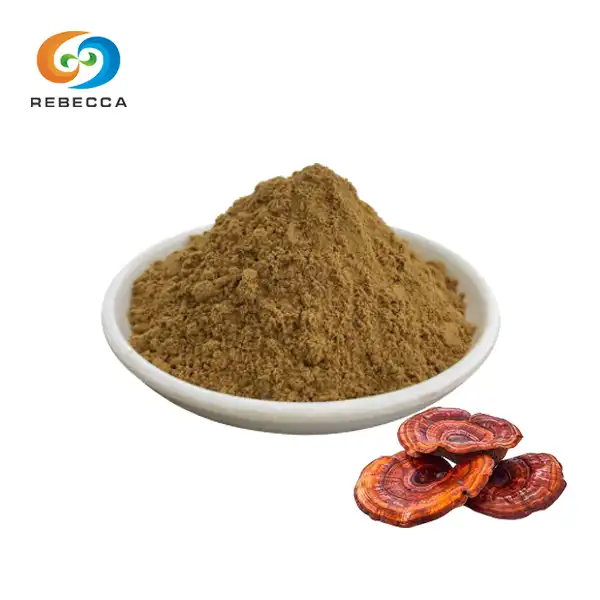
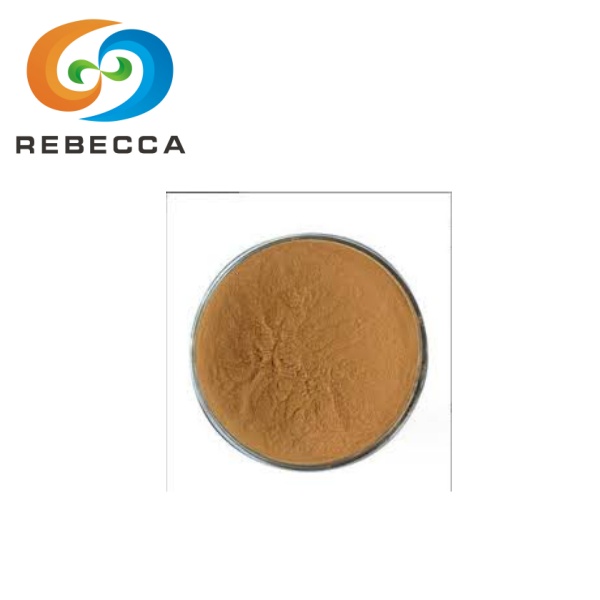
Product Name: Natural Reishi Mushroom Extract
Other Name:Ganoderma lucidum Extract;Reishi Mushroom Extract;lingzhi extract.
Latin Name:Ganoderma lucidum
Specification:10:1 ,polysaccharides 50%
Color:Red-brown Powder
Used Part:Fruiting body/sporophore
Test Method: TLC;UV
Shelf Life: 2 years
Minimum Order Quantity: 1 kg
Samples: Free samples available
Payment: Various payment methods accepted.
Advantages: Manufactured in a 100,000-grade cleanroom, our products are additive-free, non-GMO Inner Package: Double PE Bags; Net 25kg/Drum
Storage:Store in a cool, dry place away from Light and Heat.
Reishi Mushroom Extract: The Skin Health Benefit
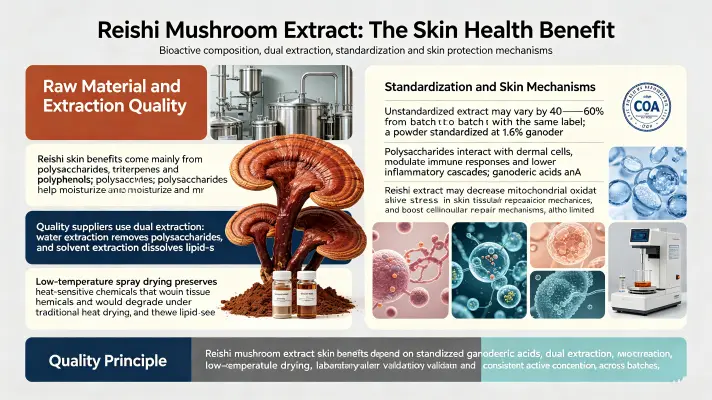
The effects of reishi on the skin are mainly due to two compound families. By understanding their chemistry, formulators may optimize performance and make credible promises.
Bioactive Composition: What Makes Reishi Effective
Polysaccharides (long chain carbs) help moisturize and modulate the immunological system in skin cells. Triterpenes, especially ganoderic acids, are known to have antioxidant and anti-inflammatory properties (Boh et al., 2007). Polyphenols also act as free radical scavengers. The ratio and concentration of these chemicals depends greatly on growing techniques and time of harvest (Sanodiya et al., 2009; Saltarelli & Sisti, 2009).
For B2B customers, reishi mushroom extract supplier standardization is more important than the raw extract weight. A powder standardized at 1.6% ganoderic acids provides consistent results. An unstandardized extract may vary by 40-60% from batch to batch with the same label.
Dual Extraction: Extraction of Both Classes of Compounds
Quality suppliers use a dual extraction process. Extraction with water removes polysaccharides. The solvent extraction dissolves the lipid soluble triterpenes. If you don't have both techniques, the formulators only have half of the active profile.
Low-temperature spray drying then maintains heat-sensitive chemicals that would deteriorate under traditional heat drying. The resultant powder is standardized for triterpene concentration – normally between 1% and 1.6% – which is validated by UV spectrophotometry, a laboratory technique that measures light absorption at certain wavelengths. This allows for consistent formulation outputs between batches.
Scientific Foundation for Skin Applications
Several processes of reishi mushroom extract important to skin are documented in peer-reviewed research. Polysaccharides interact with the dermal cells modulating the immune responses and lowering inflammatory cascades contributing to sensitivity and accelerated aging (Batra et al., 2013). Ganoderic acids antagonize reactive oxygen species (ROS) – unstable chemicals that attack biological components including collagen and DNA (Wachtel-Galor et al., 2011).
Research using wound healing models has shown that reishi mushroom extract decreases mitochondrial oxidative stress in skin tissue, hence boosting cellular repair mechanisms (Zeng et al., 2019). While controlled clinical studies for cosmetic performance are currently limited, the biochemical data is adequate to support claims of functional skin benefit when coupled with proper stability and effectiveness testing.
Knowing the science is only the first step. “Procurement professionals and formulators need to understand how these mechanisms translate into specific, marketable skin benefits.” In the next part, we lay out what reishi truly brings to final items.
Key Skin Benefits of Reishi Mushroom Extract
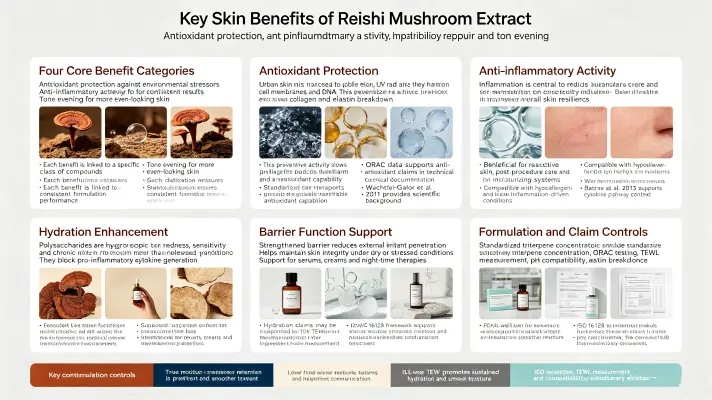
The four benefit categories most important for skincare companies are antioxidant protection, anti-inflammatory activity, hydration support and tone evening. Each is derived from a particular class of compounds and has suggested concentration limits based on industry practice.
Antioxidant Protection Against Environmental Stressors
Skin in the city is exposed to pollution, UV radiation and other oxidative stresses. Reishi’s triterpenes neutralize free radicals before they may harm cell membranes and DNA (Wachtel-Galor et al., 2011). This preventive activity slows the breakdown of collagen and elastin fibers.
Standardized reishi mushroom extract formulations with quantifiable triterpene concentration provide detectable antioxidant capability. This is commonly stated as ORAC values (Oxygen Radical Absorbance Capacity – a laboratory test that examines the ability of a material to neutralize free radicals). B2B purchasers should ask for ORAC data to be included in their technical documentation to support antioxidant claims.
Anti-Inflammatory Effects for Sensitive Skin
Inflammation is the core of many skin conditions, from acute redness to chronic sensitivity. The ganoderic acids may alter the inflammatory pathways at a molecular level. They block the generation of pro-inflammatory cytokines, which are signaling proteins that trigger immune responses in the skin tissue (Batra et al., 2013).
These properties make the reishi mushroom extract beneficial in treatments for reactive skin, post-procedure care, or conditions caused by inflammation. The extract is suited for hypoallergenic lines and compatible for neutral pH and low-irritation, ISO 16128 (international standard for natural origin cosmetic ingredients).
Hydration Enhancement and Barrier Function Support
Polysaccharides are hygroscopic (they absorb and hold water molecules from the surrounding environment). This means true moisture retention in the stratum corneum (the outermost layer of skin) rather of just superficial slickness.
The enhanced barrier function reduces transepidermal water loss (TEWL, the rate of water evaporation from the skin). Lower TEWL promotes sustained hydration, better texture and a more plump look. These attributes are employed by product manufacturers in serums, creams and night-time therapies. Synergic activity with reishi polysaccharides and ceramides or hyaluronic acid for a moisturizing action.
Brightening and Tone-Evening Potential
Reishi mushroom extract is not a tyrosinase inhibitor. (Enzyme tyrosinase catalyzes melanin production.) But its antioxidant activity acts to suppress the oxidative pathways that generate melanin in response to UV exposure. Ganoderic acids are known to alter the cellular signaling pathways involved in pigmentation in several studies but the specific mechanisms are not yet understood (Sanodiya et al., 2009).
Brands may pitch this ingredient as part of a holistic approach to skin tone — promoting cellular health that serves as the foundation for even pigmentation, as opposed to actively suppressing melanin formation.
|
Benefit Area |
Active Compound |
Recommended Use Level |
Key Metric to Request from Supplier |
|
Antioxidant defense |
Triterpenes (ganoderic acids) |
1%–3% |
ORAC value |
|
Anti-inflammatory |
Ganoderic acids |
0.5%–2% |
Cytokine inhibition data |
|
Hydration support |
Polysaccharides |
2%–5% |
TEWL reduction % |
|
Tone evening |
Triterpenes + polyphenols |
1%–3% |
Tyrosinase activity assay |
Knowing which advantages apply to your product line is crucial. And as crucial is knowing how to actually get reishi into a stable, effective formulation. The following part discusses format choice, dosage, and ingredient synergy.
How to Incorporate Reishi Mushroom Extract into Skin Care Products
Successful formulation relies on three factors: the format of the extract, concentration and compatibility with additional actives. Get any of the above incorrect and even good grade extract will not work well.
Format Selection: Powder vs. Liquid Concentrate
The most flexible are powder forms. Fine particle powders (usually 80-100 mesh, i.e. particles pass through a screen with 80-100 holes per inch) disperse evenly in aqueous and emulsion systems. A moisture level of less than 5% minimizes clumping during storage and ensures stability.
Pre-dispersing the reishi mushroom extract powder in glycerin or propylene glycol is best for complicated recipes to ensure optimal incorporation. Liquid concentrates are convenient but may include preservatives or solvents that need to be compatibility tested with the other ingredients.
|
Property |
Powder |
Liquid Concentrate |
|
Dosing precision |
High |
Moderate |
|
Shelf stability |
Up to 24 months |
Typically 12 months |
|
Pre-dispersion needed |
Yes, for complex formulas |
No |
|
Preservatives |
None required |
Often required |
|
Shipping weight |
Lower |
Higher |
|
Cost per kg (bulk) |
Lower |
Higher |
Dosage Recommendations and Efficacy Thresholds
These ranges are industry practice, depending on the intended outcomes:
·Anti-inflammatory & soothing: 0.5%-2% of final product
• Antioxidant protection: 1%–3%, depending on extract standardization
·Hydration-focused formulations: 2%-5% for noticeable barrier improvement
Concentration should be based on standardized potency of the extract . A 1.6% triterpene standard permits accurate dosage calculations for any batch size. Stability testing should always be done at anticipated usage levels to ensure activity throughout shelf life.
Synergistic Combinations with Other Actives
The best formulas are those that combine reishi with complimentary, not duplicate, actions. Here is a brief reference of proven combinations:
|
Pairing Ingredient |
Complementary Mechanism |
Combined Benefit |
|
Niacinamide |
Barrier repair + redness reduction |
Multi-pathway sensitivity relief |
|
Peptides |
Collagen signaling + antioxidant protection |
Structural + defensive anti-aging |
|
Green tea extract |
Diverse polyphenol antioxidant network |
Broader free radical coverage |
|
Hyaluronic acid |
Surface hydration + intrinsic moisture binding |
Multi-layer hydration |
|
Ceramides |
Lipid barrier restoration |
Comprehensive barrier repair |
Formulation knowledge must be grounded in procurement realities. Before a formulation hits production, B2B buyers must analyze suppliers, negotiate price and ensure compliance with regulations in target markets. These important buying factors are addressed in the concluding section.
Conclusion
Four recognized skin advantages from the Reishi mushroom extract include antioxidant defense, anti-inflammatory activity, hydration support and tone-evening potential. The benefits are based on particular bioactive substances (triterpenes and polysaccharides) that can be defined and validated by analytical testing.
For B2B procurement specialists, the quality of supplier paperwork, price transparency and regulatory compliance across desired markets are everything. Increasing demand for clinically relevant botanical substances makes standardized reishi extracts a multipurpose natural active that is supported by biochemical data, not simply marketing appeal.
FAQ
1. What ingredients in reishi extract help the skin?
Polysaccharides help skin cells retain moisture and regulate immunological responses. Triterpenes (ganoderic acids) are antioxidant and anti-inflammatory. Polyphenols provide additional scavenging ability for free radicals. These substances are standardized to assure their presence at effective quantities in final goods.
2. What extract format is ideal for cosmetics?
Powders give the most formulation flexibility and shelf durability. Fine mesh powder (80 – 100 mesh) disperses evenly in creams, serums and lotions. Low moisture content (less than 5%) avoids deterioration during storage up to 24 months.
3. Is there research supporting reishi usage in skincare?
Antioxidant activity, anti-inflammatory mechanisms and wound healing benefits in skin tissue models are documented in peer-reviewed publications (Wachtel-Galor et al., 2011; Zeng et al., 2019). Controlled clinical studies evaluating cosmetic results in human participants are very scarce. This biochemical data, along with stability and effectiveness testing, substantiates functional skin benefit claims.
4. Reishi extract combined with other active ingredients?
Yes. It is compatible with niacinamide, peptides, hyaluronic acid and other plant extracts. The best formulations are achieved by pairing with complimentary, not redundant, processes.
5. The Storage of Bulk Reishi Extract Powder
Store in sealed airtight containers at room temperature (15-25°C) and protected from direct light. To keep from caking, maintain relative humidity less than 60%. Under these circumstances the powder is stable for up to 24 months.
Request Your Free Reishi Extract Sample
Includes a comprehensive Certificate of Analysis, formulation compatibility guide, and 100g of standardized Reishi mushroom extract powder. $150 value – free to eligible B2B buyers.
Our Shaanxi manufacturing plant is GMP and ISO certified. Capacity each year is above 500 metric tons and can handle requests for both sample-grade and bulk-volume.
Contact: Email information@sxrebecca.com
References
1. Wachtel-Galor, S., Yuen, J., Buswell, J. A., & Benzie, I. F. F. (2011). Ganoderma lucidum (Reishi or Lingzhi) A Healing Mushroom. In I. F. F. Benzie & S. Wachtel-Galor (Eds. ), Herbal Medicine: Biomolecular and Clinical Aspects (2nd ed. ). CRC Press/Taylor & Francis. PMID: 22593926.
2. Sanodiya, B.S., Thakur, G.S., Baghel, R.K., Prasad, G.B.K.S. and Bisen, P.S. 2009. Ganoderma lucidum: A Pharmacological Potential Macrofungus.Current Pharmaceutical Biotechnology, 10 (8), 717-742. doi: 10.2174/138920109789607851
3. Boh, B., Berovic M., Zhang J. and Zhi-Bin, L. (2007). Ganoderma lucidum and its bioactive metabolite.Annual Review of Biotechnology. 13:265-301. doi:10.1016/S1387-2656(07)13008-X
4. Zeng, P., Chen, Y., Zhang, L., & Xing, M. (2019). Polysaccharides of Ganoderma lucidum inhibit mitochondrial oxidative stress to accelerate the healing of resistant wounds.Cell Physiol Biochem 37 , 926-938. doi:10.1159/000495032
5. Saltarelli, J. H. & Sisti, M. (2009). Effect of various growth conditions on the production and composition of polysaccharides from Ganoderma lucidum.Int. J. Med Mushrooms 11, 21–30. doi: 10.1615/IntJMedMushr.v11.i1.30
6. Batra, P., Sharma, A. K., & Khanna, N. (2013). Ganoderma lucidum: Is it a Real Therapeutic Panacea?International Journal of Medicinal Mushrooms 15(6), 591–611. doi:10.1615/IntJMedMushr.v15.i6.50