Reishi Mushroom Powder Benefits For Skin
reishi mushroom extract (Ganoderma lucidum) is gaining more and more attention for the development of nutraceuticals and cosmetics. What makes it attractive is the mix of a long history of usage and new scientific studies on its bioactive components. It is frequently tested for its antioxidant capacity, anti-inflammatory action, and skin barrier support functions in the current cosmetic and supplement industries.
This essay takes an orderly, evidence-based approach to dissecting the issue. It looks at the potential skin health benefits of reishi mushroom powder, how it is formulated and what B2B professionals need to consider when acquiring and developing it for products. The idea is to go from generic assertions to practical comprehension of formulation and responsible use context.
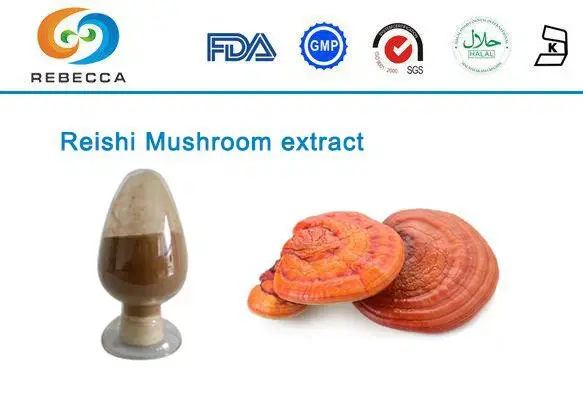
Product Name: Natural Reishi Mushroom Extract
Other Name:Ganoderma lucidum Extract;Reishi Mushroom Extract;lingzhi extract.
Latin Name:Ganoderma lucidum
Specification:10:1 ,polysaccharides 50%
Color:Red-brown Powder
Used Part:Fruiting body/sporophore
Test Method: TLC;UV
Shelf Life: 2 years
Minimum Order Quantity: 1 kg
Samples: Free samples available
Payment: Various payment methods accepted.
Advantages: Manufactured in a 100,000-grade cleanroom, our products are additive-free, non-GMO Inner Package: Double PE Bags; Net 25kg/Drum
Storage:Store in a cool, dry place away from Light and Heat.
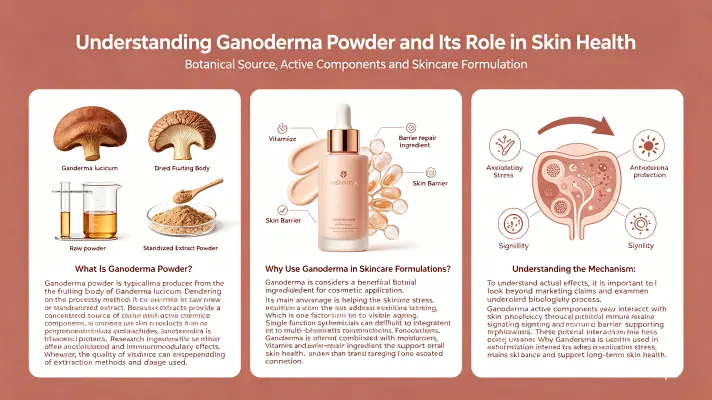
Understanding Reishi Mushroom Powder and Its Role in Skin Health
What Reishi Mushroom Powder Actually Is?
Reishi mushroom powder is generally made from the fruiting body of Ganoderma lucidum. Depending on the techniques of processing it may be produced as a raw powder or a standardised extract. Extracts are more typically seen in skin care products and supplements since they are concentrated sources of certain active chemicals.
The main active constituents are polysaccharides, triterpenes (ganoderic acids) and trace proteins. These chemicals are researched for their antioxidant and immunomodulating effects. However, the quality of evidence differs according on the extraction process and dose.
Why It Is Used in Skincare Formulations?
Reishi is promoted as a useful botanical element for cosmetics applications. The primary advantage is that it could aid skin to manage oxidative stress, one of the reasons that contributes to noticeable ageing.
In contrast, single-action synthetic chemicals are not often found in multi-functional compositions. It’s mixed with humectants, vitamins, and barrier-repair agents to aid with overall skin health objectives — not just one problem.
To really grasp how this may work in practice, it is crucial to go beyond marketing promises and look at the potential biological process. The next section describes the potential interaction of its active chemicals with skin physiology.
Bioactive Profile and Mechanisms Supporting Skin Function
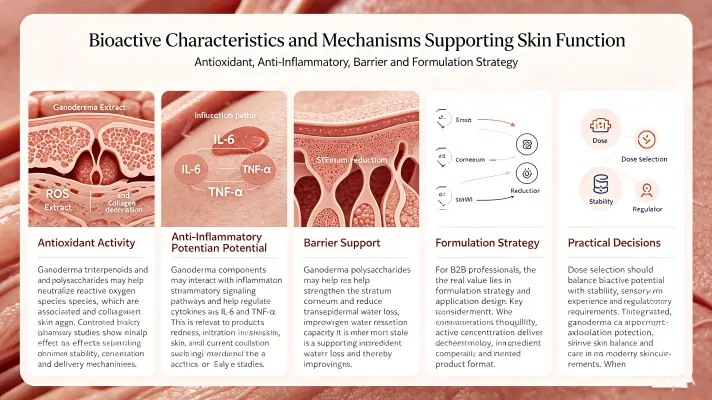
Antioxidant Activity and Oxidative Stress Protection
One of the most mentioned benefits of reishi extract is its antioxidant activity. Reactive oxygen species (ROS) are neutralised by triterpenes and polysaccharides. These unstable chemicals are related with the break down of collagen and accelerated skin ageing.
Controlled laboratory studies suggest antioxidant behaviour, but real-world skin effects are highly dependent on formulation stability, concentration and delivery mechanisms. This is a key difference typically omitted in simplified product claims.
Anti-Inflammatory Pathways and Skin Sensitivity
Research indicates that Ganoderma lucidum contains chemicals that could interact with inflammatory signalling pathways. In experimental models, several studies have shown regulation of cytokines such as IL-6 and TNF-α.
From a skincare viewpoint, this is important for products targeted at redness, irritation, or sensitive skin types. However, the results are still mostly based on preclinical or early-stage research, as opposed to large-scale human studies under settings of cosmetic usage.
Barrier Function and Hydration Support
Reishi polysaccharides are commonly connected with moisture retention. In skincare formulas, this means it may potentially promote the stratum corneum, the outermost layer of the skin barrier.
A stronger barrier may minimise transepidermal water loss (TEWL) and hence improve hydration retention. This makes reishi a complimentary ingredient, not a stand-alone active, for formulators.
But for B2B experts the true benefit comes in formulation strategy and use design, although knowing about these methods is important. The following part examines how reishi is included into goods and how dose and compatibility are regulated.
Formulation Applications, Usage, and Ingredient Synergy
Common Cosmetic and Supplement Applications
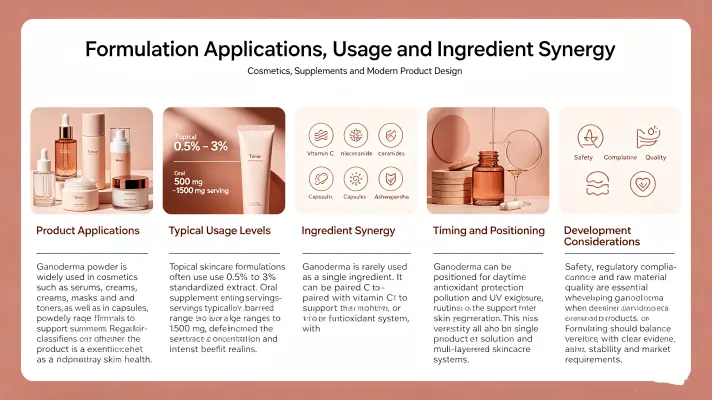
Reishi mushroom powder is utilised in numerous product categories. It is often added to cosmetics such as serums, creams, masks and essences. In the nutraceutical area, it is used in capsules, powders and functional drinks for skin health.
The dual-purpose character of reishi is part of the draw for B2B firms that work in both the beauty and wellness industries. However, its regulatory categorisation hinges on whether it is marketed as a cosmetic element or a nutritional supplement.
Typical Usage Levels in Formulations
Standardised extracts are commonly used in low to moderate amounts in topical skin care products. A usual range is anywhere from 0.5% to 3% depending on the kind of product and target skin problem.
For oral supplements, doses vary more considerably, usually in the range of 500 mg to 1500 mg per serving for standardised extracts. Values are dependent on extract concentration and anticipated functional claims.
Ingredient Synergies in Modern Formulation Design
Rarely is reishi utilised as a single ingredient in high performance formulas. It is commonly combined with other active substances to improve overall effectiveness.
Reishi is often used with vitamin C to help the body’s antioxidant networks. Its barrier supporting qualities may also be improved by niacinamide and ceramides. Some “stress-skin axis” products include botanical adaptogens such as ashwagandha.
Timing and Product Positioning
Some manufacturers market reishi products, including natural reishi mushroom extract, for use in nocturnal skincare regimens, when skin regeneration processes are more active. Others concentrate on daytime antioxidant defence from environmental stresses including pollution and UV exposure.
This versatility enables formulators to create either single-product solutions or multi-layered skin care systems that use reishi at different phases.
Reishi has its limits, although it may be formulated in a variety of ways. Product development choices also matter from the safety, regulatory and raw material quality standpoint.
Limitations, Safety Considerations, and Sourcing Quality
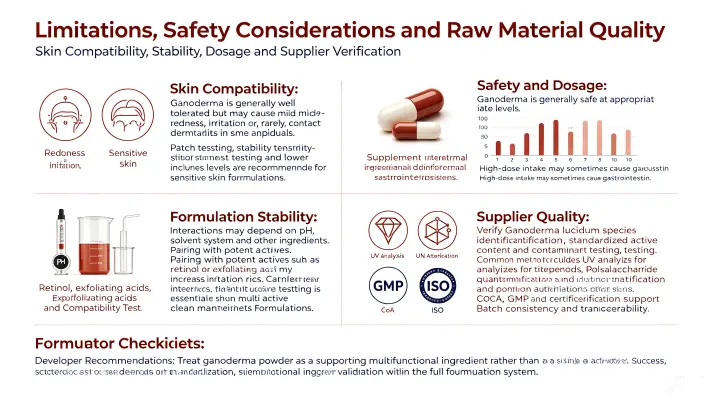
Potential Sensitivity and Skin Compatibility
Reishi is typically regarded a well-tolerated supplement but may induce sensitivity in certain people. Reactions may include moderate redness, irritation, or, in rare circumstances, contact dermatitis.
Patch testing and stability testing are important for formulators when incorporating botanical extracts into novel products. For sensitive skin, formulations are generally advised at lower doses.
Formulation Interactions and Stability Considerations
Reishi extract interactions might be pH, solvent system and co-ingredients dependent. Botanicals may also raise irritation potential when paired with strong actives like as retinoids or exfoliating acids.
The significance of thorough compatibility testing in product development for stability and reduction of adverse responses. This is particularly the case with multi-active “clean beauty” formulations.
Safety and Dosage Boundaries
Reishi is usually regarded safe to eat in modest amounts, although in certain occasions large doses have resulted in stomach upset. As with other bioactive supplements, for long term safety dose regulation is necessary.
Topical use usually carries less systemic risk, but when designing goods, you need to take account of cumulative exposure from several products.
Quality Control and Supplier Evaluation
Verification of quality is one of the most crucial aspects of acquiring reishi mushroom powder from the procurement point of view. Key indications include species identification (Ganoderma lucidum), standardised amounts of active compounds and testing for contaminants.
Common testing techniques include UV analysis for triterpenes, polysaccharide quantification and DNA-based identification to avoid adulteration. Certificates of Analysis (COA) are critical documentation for verification at the batch level.
Certified production systems, such as GMP and ISO standards, provide an extra guarantee of consistency and traceability. These aspects are especially significant for brands in regulated cosmetic and supplement sectors.
Final Perspective for Product Developers
Think of reishi mushroom powder as a supporting, multi-functional ingredient rather than a single active solution. What it brings to the table is formulation synergy, antioxidant contribution and versatility across product kinds.
For B2B buyers and formulators, success is not so much about the ingredient itself but about how it is standardised, blended and verified inside a whole formulation system.
FAQ
What is the difference between topical and oral reishi for skin health?
Topical reishi delivers antioxidants and anti-inflammatory compounds directly to skin tissues, addressing localized concerns like redness and texture. Oral supplementation provides systemic benefits, supporting immune function, circulation, and collagen synthesis from within. Combining both approaches may optimize outcomes, though clinical data remains limited.
How do I verify the authenticity and potency of reishi mushroom powder?
Request third-party lab reports confirming species identification (Ganoderma lucidum), active compound levels (triterpenes, polysaccharides), and absence of contaminants. DNA barcoding detects adulteration with other mushroom species or fillers. UV spectroscopy quantifies triterpene content, while enzymatic assays measure polysaccharide concentrations. Reputable suppliers provide batch-specific Certificates of Analysis upon request.
Can reishi mushroom powder be used in both cosmetic and supplement formulations?
Yes, reishi extract serves dual purposes, though regulatory pathways differ. Cosmetic-grade extracts prioritize safety testing, stability in emulsions, and sensory attributes. Supplement-grade materials emphasize bioavailability, standardized actives, and GMP compliance. Some suppliers offer multi-purpose extracts meeting both standards, simplifying procurement for brands operating across categories.
Partner with Rebecca for Premium Reishi Mushroom Powder Supply
Rebecca specialises in providing high-quality reishi mushroom extract to B2B customers in the pharmaceutical, nutraceutical, and cosmetic industries. Our Reishi Mushroom Extract is standardised to 1% and 1.6% Ganoderma Triterpenes and tested by UV techniques. It is manufactured under strict GMP and ISO guidelines. With 500+ metric tonnes of yearly production capacity and complete certifications such as HACCP and ISO 22000, we guarantee batch consistency and regulatory compliance. Whether you need reishi mushroom powder in bulk for supplement production, or cosmetic grade extracts for skincare products, our technical staff offers formulation help and customised solutions. For estimates, samples and complete product specs please feel free to contact us at information@sxrebecca.com or sxrebecca.com. Rebecca is an experienced provider of reishi mushroom powder that can offer you dependable logistics, reasonable pricing, and prompt support to help take your product development to the next level.
References
1. Wachtel-Galor S, Yuen J, Buswell JA, Benzie IFF. Ganoderma lucidum (Lingzhi or Reiki): A Medicinal Mushroom. In: Benzie IFF, Wachtel-Galor S, editors. Herbal Medicine: Biomolecular and Clinical Aspects. 2nd edition. Boca Raton (FL): CRC Press/Taylor & Francis; 2011.
2. Sliva D. Ganoderma lucidum (Reishi) in cancer treatment. Integrative Cancer Therapies. 2003;2(4):358-364.
3. Boh B, Berovic M, Zhang J, Zhi-Bin L. Ganoderma lucidum and its pharmaceutically active compounds. Biotechnology Annual Review. 2007;13:265-301.
4. Sanodiya BS, Thakur GS, Bagrodia RK, Prasad GB, Bisen PS. Ganoderma lucidum: a potent pharmacological macrofungus. Current Pharmaceutical Biotechnology. 2009;10(8):717-742.
5. Bishop KS, Kao CH, Xu Y, Glucina MP, Paterson RR, Ferguson LR. From 2000 years of Ganoderma lucidum to recent developments in nutraceuticals. Phytochemistry. 2015;114:56-65.
6. Hennicke F, Cheikh-Ali Z, Liebisch T, Maciá-Vicente JG, Bode HB, Piepenbring M. Distinguishing commercially grown Ganoderma lucidum from Ganoderma lingzhi from Europe and East Asia on the basis of morphology, molecular phylogeny, and triterpenic acid profiles. Phytochemistry. 2016;127:29-37.