What does L carnitine powder do?
l carnitine powder is a natural, clinically validated amino acid derivative. It exists naturally in the human body and serves a core role in human energy metabolism. As a high-purity bulk ingredient widely used in dietary supplements, sports nutrition and functional foods, it focuses on boosting fat oxidation, improving exercise performance and regulating metabolic health. Different from stimulant-based energy ingredients, L-carnitine features high safety and stable efficacy. It has obtained global mainstream regulatory recognition. This article systematically explains its working mechanism, core benefits, formulation advantages and safe application standards to support B2B formulators and procurement teams in product development and ingredient selection.
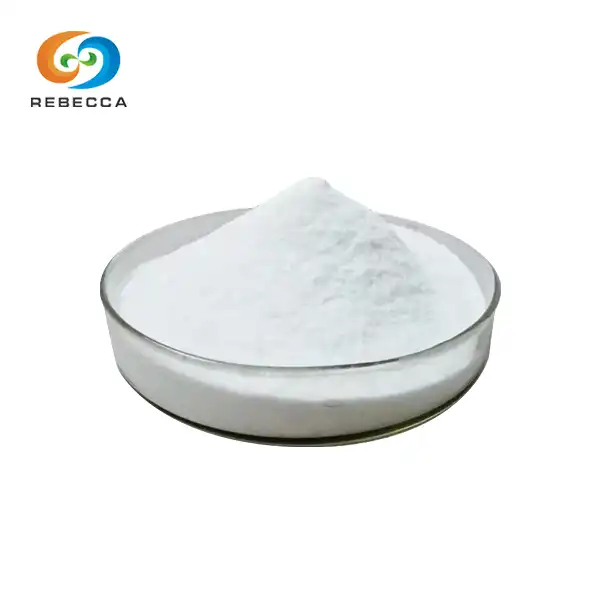
L Carnitine Powder
Product Name:L-carnitine
CAS No.:541-15-1
Specifications :L(-)-Carnitine,Min 99%
Test :HPLC
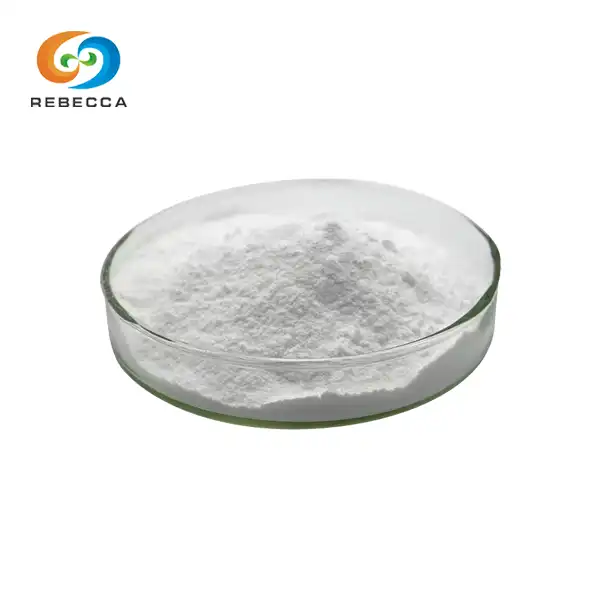
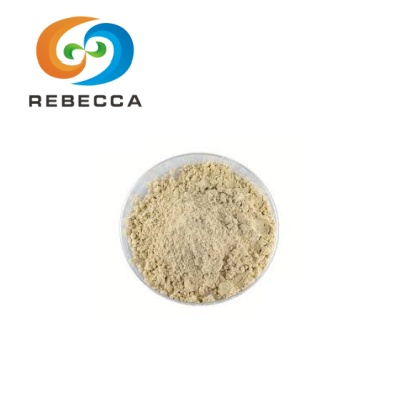
Appearance :White crystalline Powder
Applying:The safest nutritional supplement for weight loss without side effects.
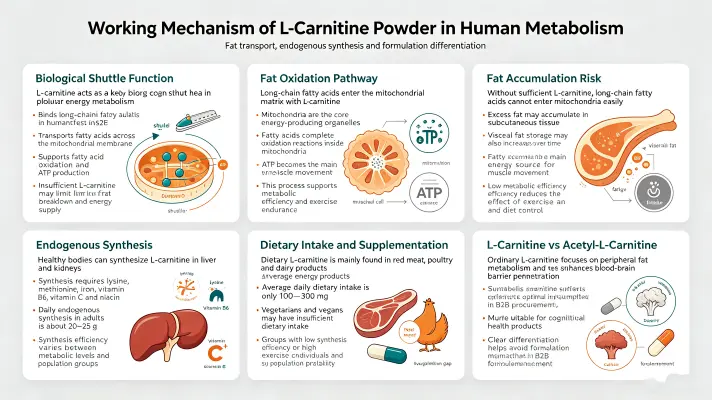
Working Mechanism of L-Carnitine Powder in Human Metabolism
To understand the functions of L-carnitine powder, it is essential to clarify its basic metabolic principle and endogenous synthesis characteristics. All physiological benefits and application values are derived from its unique biological carrier function.
Basic Fat Transport and Energy Conversion Mechanism
L-carnitine acts as a key biological shuttle in cellular energy metabolism . Its core function is to bind long-chain fatty acids in human fat tissue. It transports these fatty acids across the mitochondrial membrane into the mitochondrial matrix. Mitochondria are the core energy-producing organelles of human cells. Fatty acids entering the mitochondria will complete oxidation reaction and generate ATP, which is the main energy source for human muscle movement and basic physiological activities.
Without sufficient L-carnitine, long-chain fatty acids cannot enter the mitochondria for decomposition. Excess fat will accumulate in subcutaneous tissue and visceral tissue. It will also lead to insufficient energy supply during exercise, resulting in physical fatigue and low metabolic efficiency. This mechanism explains why L-carnitine is the core ingredient for natural fat metabolism regulation.
Endogenous Synthesis and External Supplementation Logic
Healthy human bodies can synthesize L-carnitine independently in the liver and kidneys. The synthesis process requires the participation of lysine, methionine, iron, vitamin B6, vitamin C and niacin . The daily endogenous synthesis volume of adults is about 20 to 25 grams. However, synthesis efficiency varies greatly among different groups.
Vegetarians and vegans are prone to insufficient carnitine synthesis. Because dietary L-carnitine is mainly concentrated in animal products such as red meat, poultry and dairy products. The daily dietary intake of ordinary people is only 100 to 300 mg, which is far lower than the dosage required for metabolic improvement . Groups with low synthesis efficiency, high exercise consumption or single dietary structure need external L-carnitine supplementation to maintain optimal metabolic levels.
Mechanistic Differences From Similar Derivatives
Many formulators confuse common L-carnitine with acetyl-L-carnitine. The two have different core application scenarios. Ordinary L-carnitine powder focuses on peripheral fat metabolism and muscle energy supply. It is suitable for weight management and sports nutrition products. Acetyl-L-carnitine has an additional acetyl group, which enhances blood-brain barrier penetration . It is more suitable for cognitive health products rather than daily fat-burning and endurance-improving formulas. Clear differentiation helps B2B buyers avoid formulation mismatches.
Based on the stable metabolic mechanism of L-carnitine, its physiological functions are transformed into multiple measurable commercial benefits. These targeted advantages cover weight management, sports recovery and metabolic maintenance, forming its core market competitiveness.
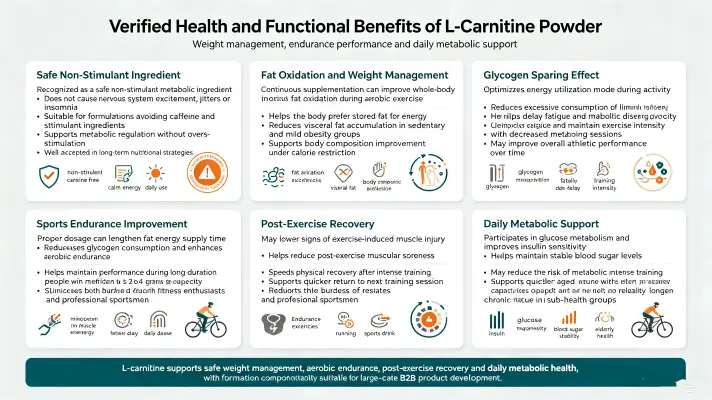
Verified Health and Functional Benefits of L-Carnitine Powder
Safe and Efficient Weight Management Support
L-carnitine is recognized as a safe non-stimulant metabolic ingredient by the World Obesity Federation. It does not produce nervous system excitement, jitters or insomnia caused by caffeine and stimulant ingredients. Clinical studies show that continuous L-carnitine supplementation can significantly improve whole-body fat oxidation rate during aerobic exercise .
It optimizes the body’s energy utilization mode. It makes the body prefer to decompose stored fat for energy instead of consuming limited muscle glycogen. For ordinary people with mild obesity and sedentary lifestyle, standardized supplementation helps reduce visceral fat accumulation. For users adhering to calorie restriction, it can improve body composition and reduce fat rate without damaging muscle mass. It is worth noting that L-carnitine works best with regular exercise and scientific diet. Single supplementation has limited fat-burning effect.
Sports Endurance Improvement and Post-Exercise Recovery
To fitness enthusiasts and professional sportsmen L-carnitine powder has double worth, both in terms of enhancing exercise performance and speeding up recuperation. Long-term endurance activity consumes huge amounts of muscle glycogen in the human body. If you don't have enough glycogen, you will get tired quickly and your activity won't be as effective.
L-carnitine supplementation in proper dosage can lengthen the time of fat energy supply. It decreases glycogen consumption and significantly enhances aerobic endurance. Moreover, it can also lower the signs of exercise-induced muscle injury. It also helps reduce post-exercise muscular soreness and speeds physical recovery. The safe dosage of clinically validated for sports situations is 2 to 4 grams per day, which may maximise the effect of exercise and avoid physical burden.
Daily Metabolic and Physical Condition Regulation
Beyond weight loss and sports scenarios, L-carnitine powder also supports daily metabolic health. It participates in human glucose metabolism and improves insulin sensitivity. It helps maintain stable blood sugar levels and reduces the risk of metabolic disorders. For middle-aged and elderly people with decreased metabolic capacity and sub-health groups with long-term fatigue, continuous low-dose supplementation can improve basic energy metabolism levels and relieve chronic fatigue.
Compared with other mainstream nutritional ingredients in the market, L-carnitine powder has unique formulation and safety advantages. Its stable physical and chemical properties and wide compatibility make it more suitable for large-scale B2B production and multi-scene product development.
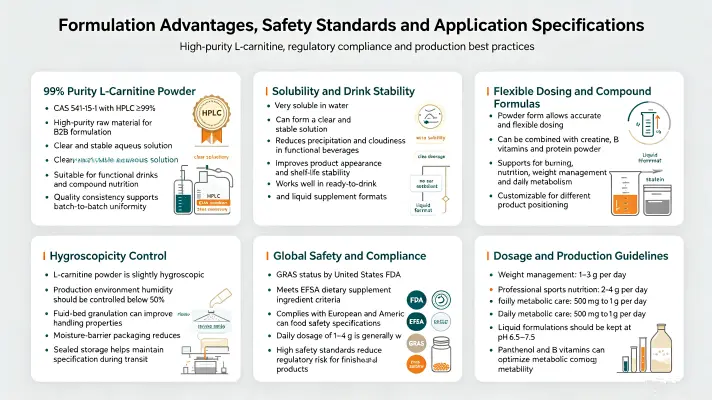
Formulation Advantages, Safety Standards and Application Specifications
Unique Formulation Advantages of 99% Purity L-Carnitine Powder
High-purity L-carnitine powder (CAS 541-15-1, HPLC ≥99%) has evident B2B application advantages over capsules, liquids and other dosage forms. It is very soluble in water and can generate a clear and stable solution in water. It will not cause precipitation or cloudiness in functional drinks, considerably improving the look and stability of the product.
The powder form allows flexible and accurate dosing. It is free to be combined with creatine, B vitamins, protein powder and other active substances to make compound nutrition formula. It is suitable for various product positioning such as fat burning, endurance improvement and overall energy replenishment. Although L-carnitine powder is slightly hygroscopic, the problems of moisture absorption and agglomeration in production and storage can be perfectly solved by contemporary fluid-bed granulation and moisture-barrier packaging technology.
Clinical Safety Profile and Global Regulatory Compliance
Carnitine has a good safety margin following decades of clinical verification. It is GRAS (Generally Recognised As Safe) by the United States FDA. It meets the EFSA dietary supplement ingredient criteria and European and American food safety specifications. Within the range of daily dosage ( 1 to 4 grams ) most patients experience no adverse responses . Mild gastrointestinal discomfort in individual high dose users can be alleviated by divs photosensitive, it is not drug-dependent and it does not have iding the administration.
It ilong-term hazardous side effects. It is suitable for most healthy adults to use on a daily basis for a lengthy period of time. Its high standards of safety and worldwide unified compliance considerably mitigate the regulatory risk and market entry cost of B2B completed products.
Standardized Dosage and Formulation Best Practices
Standardised and scientific dose ranges are different application situations. For weight management products, the suggested daily dosage is 1 to 3 grams per day. For professional sports nutrition products, the daily dose may be increased to 2-4 g. The low-dose standard of 500 mg to 1 gram per day is enough to meet the basic regulatory and health needs for daily metabolic health care products.
In actual production, the manufacturer must regulate the humidity of the production environment below 50%, so that the raw materials will not absorb moisture. The liquid formulation should be maintained at pH 6.5~7.5 for long-term stability. Panthenol and B vitamins match may further optimise the metabolic effect and product compatibility.
The functional advantages of L-carnitine can be fully realised through the reliable quality of raw materials and standardised supply chain. Professional B2B suppliers may offer steady, compliant and customised raw material assistance for brand owners.
B2B Procurement Standards and Industrial Application Value
Core Quality Certification and Testing Standards
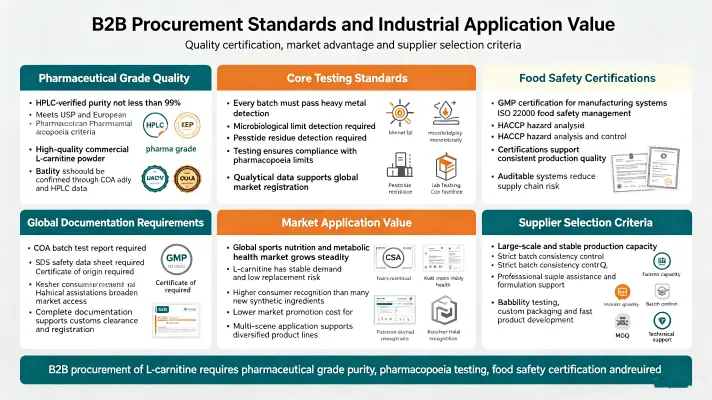
The highest quality commercial L-carnitine powder should be of pharmaceutical grade quality. Core purity not less than 99% verified by HPLC . Every batch of products has to pass heavy metal detection, microbiological limit detection and pesticide residue detection to meet the USP and European Pharmacopoeia criteria. Regular suppliers are expected to hold full certification to GMP, ISO 22000 & HACCP food safety systems.
For the global market customs clearance and product registration, the complete set of qualification documents such COA batch test report, SDS safety data sheet and origin certificate are needed. Kosher and Halal certifications can further broaden the product market coverage and suit the diverse needs of regional market.
Market Application Value and Competitive Advantages
The global sports nutrition and metabolic health market maintains steady growth. As a mature, safe and effective natural active ingredient, L-carnitine powder has stable market demand and low replacement risk. Compared with new synthetic ingredients, it has higher consumer recognition and lower market promotion cost.
Its multi-scene adaptability covers functional beverages, solid drinks, sports supplements and daily health products. It can help brands develop diversified product lines and enrich product matrices. The stable batch quality and mature production technology also reduce the risk of product failure and customer complaints for downstream manufacturers.
Professional Supplier Selection Criteria
Excellent L-carnitine providers should have large-scale and steady production capacity and strict batch consistency control ability. Transparent supply chain, flexible MOQ method and professional technical assistance are the heart of long-term partnership. 2. Professional vendors can advise on formulas, stability test results and custom packaging services. They help companies accelerate product development cycles and rapidly bring compliant, high-quality goods to market.
Conclusion
L-carnitine powder is based on its core fat transport and energy metabolism mechanism, with three key values. It is to help weight management, improve sports performance and regulate metabolic health. It has the advantages of natural mildness and non-stimulation, high safety and great formula compatibility. It’s an essential core raw material in the worldwide sports nutrition & metabolic health product track. Standardised dosage application, thorough quality screening and professional formula matching may maximise the efficacy and commercial value of L-carnitine powder, delivering B2B producers and brands consistent market competitiveness.
FAQ
What is the optimal form of this ingredient for weight management formulations?
Standard L-carnitine powder at 99% purity provides cost-effective metabolic support suitable for most weight management applications. While acetyl and propionyl derivatives exist, the base form delivers comprehensive fat metabolism benefits without premium pricing, making it ideal for mainstream supplement brands balancing efficacy with market positioning.
Can carnitine powder be combined with creatine or B-vitamins in formulations?
Absolutely—these ingredients complement rather than compete with each other. Creatine supports immediate energy availability through different pathways, while B-complex vitamins serve as enzymatic cofactors in carnitine synthesis and energy metabolism. Many successful sports nutrition products combine all three for comprehensive performance support.
How quickly do consumers typically notice results from carnitine supplementation?
Effects depend on baseline levels and application context. Individuals with deficiencies may experience energy improvements within 1-2 weeks, while athletic performance and body composition changes typically require 4-8 weeks of consistent use alongside appropriate nutrition and training protocols. Setting realistic consumer expectations supports product satisfaction and repeat purchases.
Partner with Rebecca for Premium L-Carnitine Powder Supply
Rebecca specializes in delivering pharmaceutical-grade L-carnitine powder (CAS No. 541-15-1) meeting the stringent requirements of global B2B procurement professionals. Our white crystalline powder maintains minimum 99% purity verified through HPLC testing, ensuring consistent batch quality critical for regulated manufacturing environments. With annual production capacity exceeding 500 metric tons across three dedicated production lines, we supply health supplement brands, functional beverage manufacturers, and sports nutrition companies throughout North America, Europe, and Asia-Pacific markets.
Our Shaanxi-based production facility operates under GMP, ISO 22000, and HACCP certifications, providing the quality assurance documentation essential for FDA compliance and international regulatory approvals. As an experienced L-carnitine manufacturer, we offer flexible MOQ terms, customized packaging solutions, and comprehensive technical support including formulation guidance and stability testing data. Advanced extraction and purification technologies ensure ingredient purity meeting pharmaceutical standards while maintaining competitive pricing structures for bulk orders.
Contact our export team at information@sxrebecca.com to discuss your specific requirements, request COA documentation, or explore customized supply agreements. Visit sxrebecca.com for detailed product specifications and certification portfolios demonstrating our commitment to quality excellence in the global herbal extract industry.
References
1. Flanagan, J.L., Simmons, P.A., Vehige, J., Willcox, M.D., & Garrett, Q. (2010). Role of carnitine in disease. Nutrition & Metabolism, 7(30), 1-14.
2. Pekala, J., Patkowska-Sokola, B., Bodkowski, R., Jamroz, D., Nowakowski, P., Lochynski, S., & Librowski, T. (2011). L-carnitine—metabolic functions and meaning in humans life. Current Drug Metabolism, 12(7), 667-678.
3. Rebouche, C.J., & Paulson, D.J. (1986). Carnitine metabolism and function in humans. Annual Review of Nutrition, 6, 41-66.
4. Brass, E.P. (2004). Pharmacokinetic considerations for the therapeutic use of carnitine in hemodialysis patients. Clinical Therapeutics, 26(11), 1779-1791.
5. Wall, B.T., Stephens, F.B., Constantin-Teodosiu, D., Marimuthu, K., Macdonald, I.A., & Greenhaff, P.L. (2011). Chronic oral ingestion of L-carnitine and carbohydrate increases muscle carnitine content and alters muscle fuel metabolism during exercise in humans. Journal of Physiology, 589(4), 963-973.
6. Virmani, M.A., & Cirulli, M. (2009). The role of L-carnitine in mitochondria, prevention of metabolic inflexibility and disease initiation. International Journal of Molecular Sciences, 10(4), 1495-1513.