Is ectoin effective?
Ectoin powder is one of the most talked-about natural active ingredients in cosmetics today. The big issue that many formulators and brand developers are asking is: does ectoin provide dependable, demonstrable improvements to skin? Clinical publications and decades of formulation experience have shown the effectiveness of Ectoin for skin barrier restoration, anti-inflammation and protection from environmental stress. In this piece, we will carefully tackle this important subject, examining its operational principles, tangible benefits, implementation protocols and procurement recommendations.
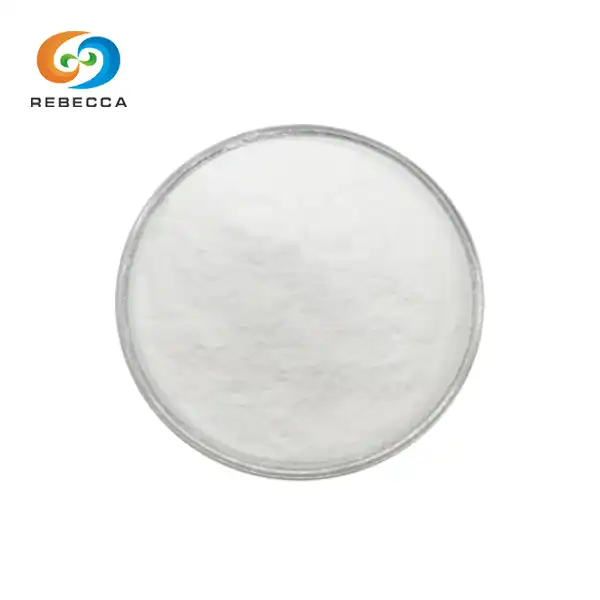
【English name】:Ectoin
【Nicknames】:Tetrahydropyrimidine, Tetrahydromethylpyrimidine Carboxylic Acid
【CAS No.】:96702-03-3
【Molecular Formula】: C6H10O2N2
【Specification】: 99%
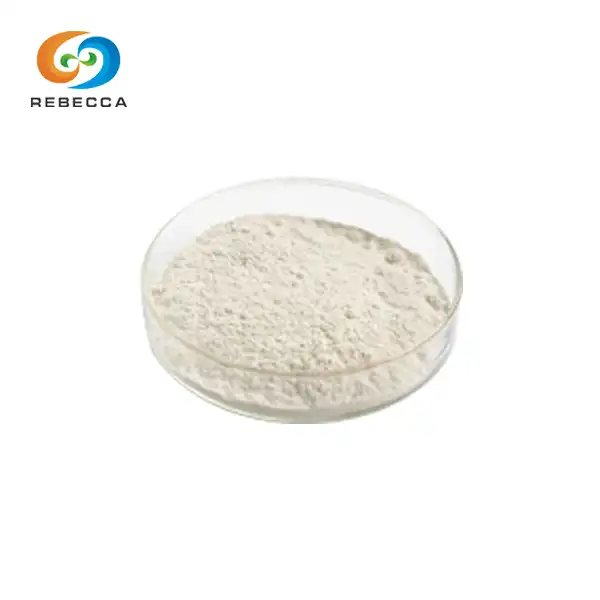
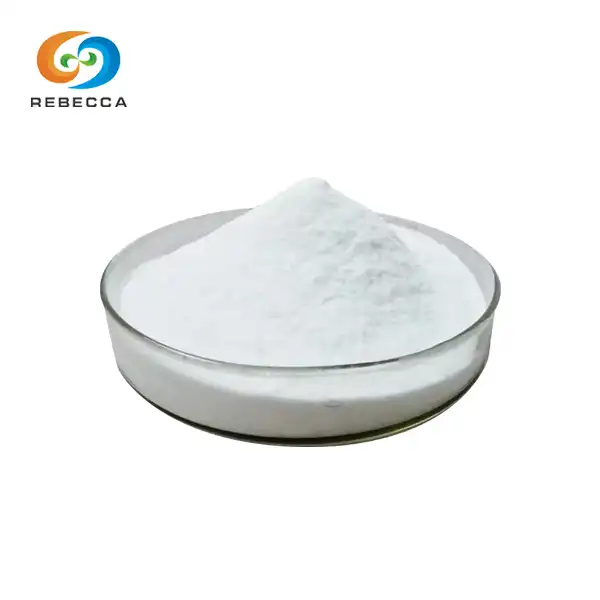
【Appearance】: White to Off-white Powder
【Test Method】: HPLC
How Does Ectoin Work to Protect the Skin?
To assess the efficacy of ectoin, the molecular properties and the protective mechanism must be known first. This section covers its origins, its molecular behavior and proven advantages on the skin.
Basic introduction to ectoin powder
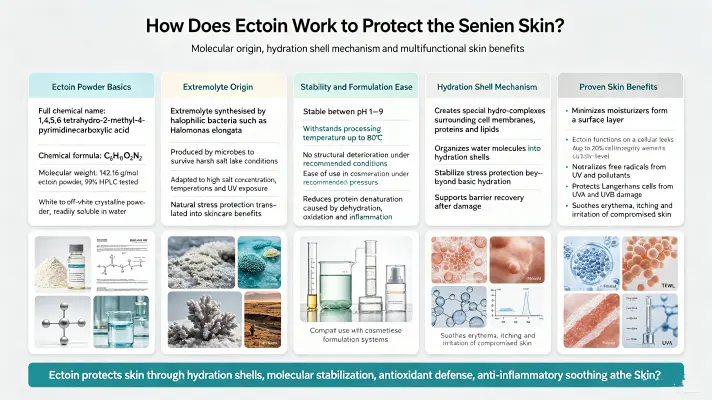
Ectoin powder, full chemical name 1,4,5,6-tetrahydro-2-methyl-4-pyrimidinecarboxylic acid It has a chemical formula C₆H₁₀O₂N₂ and a molecular weight of 142.16 g/mol. It is an extremolyte synthesised by halophilic bacteria such as Halomonas elongata. Ectoin is produced by microbes to live in salt lake conditions with severe salt concentration, temperature fluctuations and UV exposure.
High-purity ectoin powder, purity 99 %, HPLC tested. It is a white to off-white crystalline powder, readily soluble in water. It is stable between pH 1-9 and can withstand processing temperature up to 80°C without structural deterioration. Such a stability leads to tremendous ease in the manufacture of cosmetics and pharmaceuticals.
Core molecular protection mechanism
Ectoin creates special hydro-complexes surrounding cell membranes, proteins and lipids. It organizes water molecules into hydration shells. This structure stabilizes biological molecules under pressure. It reduces protein denaturation due to dehydration, oxidation and inflammation.
Typical moisturizers leave a thin layer on the surface of the skin. Ectoin powder functions on a cellular level. It protects the integrity of cells even when skin is exposed to outside harm. This distinction explains why ectoin offers stress protection beyond basic hydration.
Proven multifunctional skin benefits
Clinical investigations demonstrate many effects of ectoin at appropriate dosages (0.5%–2.0%). With continuous usage, minimizes transepidermal water loss. Some tests show up to 20% improvement in 2 weeks. A tighter epidermal barrier retains moisture and decreases skin irritation.
Ectoin is an anti-oxidant. It neutralizes the free radicals produced by UV light and pollutants. It has also been shown in research to protect Langerhans cells from UVA and UVB damage. It supports immunological function of the skin. In the meantime, ectoin has minor anti-inflammatory properties. Soothes erythema, itching and irritation of compromised skin. It suits delicate skin without any adverse effects.
Having understood its working principle and proven results, many developers want to know where ectoin stands in comparison to the conventional skincare actives. The following comparison may assist you discover its specific benefits and applicable formulation settings.
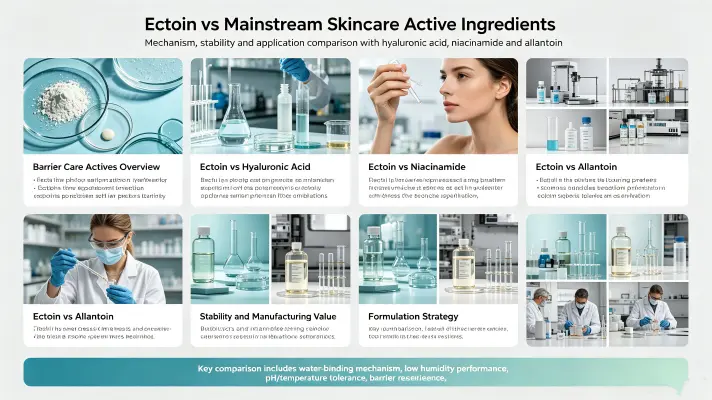
Ectoin vs Mainstream Skincare Active Ingredients
Common barrier care chemicals on the market include hyaluronic acid, niacinamide and allantoin. Each material has the mature experience of application. We compare their mechanism of action, stability and possible applications to demonstrate the irreplaceable worth of ectoin .
Ectoin vs Hyaluronic Acid
Hyaluronic acid binds significant quantities of water. It is commonly used to hydrate the surface. But its impact is very dependent on the atmospheric humidity. In dry climates, hyaluronic acid may pull water from deeper layers of the skin, worsening the problem of dryness.
Ectoin does not bind water loosely, it forms stable hydro-complexes of water. It will not lose its potency at low humidity. Hyaluronic acid is a good humectant. Ectoin has a moisturizing effect and protects cells. Formulators commonly combine the two ingredients to provide surface hydration and deep cell protection at the same time.
Ectoin vs Niacinamide and Allantoin
Niacinamide speeds barrier repair by increasing lipid production. Allantoin soothes irritation and promotes keratinocyte turnover. Neither of the two ingredients can produce hydro-complexes that can tolerate general environmental stress.
Niacinamide is unstable in acidic formulations. Allantoin has a limit of solubility in certain solutions. Ectoin powder has a better resistance to diverse pH and temperature settings. It facilitates manufacture and enhances the shelf life of products. It’s not about determining which ingredient is definitely superior, it’s about brands combining several actives depending on the goal positioning.”
Knowing the benefits of ectoin is not enough. Formulators and procurement personnel need clear information on concentration selection, product categorization and typical use situations to formulate marketable finished goods.
Practical advice on the formulation of ectoine powder
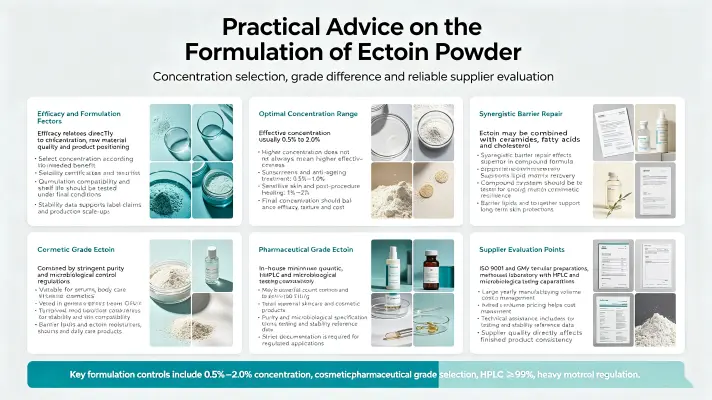
Efficacy is directly related to additional concentration, quality of source materials and product positioning. Here is a summary of the useable concentrations, application categories and standards to choose competent ectoin powder providers.
Optimal concentration for different skincare categories
The effective concentration of ectoin is usually 0.5% to 2.0%. So, with more concentration you don’t always get increased effectiveness. Hydration and Barrier Repair Cream typically contains 1.0% – 2.0%. Sunscreens and anti-ageing treatments are often formulated at 0.5%–1.0%.
In sensitive skin care and post-procedure healing products, formulators often aim for a 1%-2% concentration. Ectoin may form pairs with ceramides, fatty acids and cholesterol. Synergistic barrier repair effects are superior in compound formula than single active formulae.
Grade difference: cosmetic-grade and pharmaceutical-grade ectoin
Cosmetic ectoin powder complies with cosmetic INCI requirements. It works well for serums, body care and color cosmetics. Pharmaceutical grade ectoin is governed by stringent purity and microbiological control regulations. It may be utilized for ocular preparations, medical device goods and topical dermatological preparations.
Qualified raw materials require HPLC purity ≥99%. It should be less than 1 ppm for heavy metals indicators such as lead, arsenic and mercury. Total microbial count should be regulated to be less than 100 CFU/g. verify CAS number 96702-03-3 and verify COA reports for all papers.
Key points to evaluate reliable suppliers
Formal providers are ISO 9001 and GMP certified. Advanced vendors have in-house labs with HPLC and microbiological testing capabilities. The large volume of yearly manufacturing ensures steady supply for requests for mass manufacture.
Procurement teams should verify flexible minimum order quantity. Small batches help in early formula development. As the business grows, it helps to manage expenses by having tiered volume pricing. Professional providers also give technical assistance, including advise on compatibility testing and stability reference data.
Many buyers accumulate common queries throughout project development. We provide impartial solutions to common questions for your fast reference.
Conclusion
Clinical studies have shown that Ectoin powder works for skin care in many trials. Its unique hydro-complex process provides double value: long-lasting hydration and cellular anti-stress protection. It bypasses many of the restrictions of conventional moisturizing substances. The real impact of Ectoin powder depends on suitable choice of concentration, appropriate system of formulas and high quality sources of raw materials. Ectoin may be used as the primary active ingredient by brands that manufacture sensitive skin care, anti-ageing products and post-procedure repair series for distinct market rivalry.
FAQ
1.Is ectoin safe for all skin types?
Many dermatological testing demonstrate reduced irritation risk of ectoin. It is non-toxic and hypo-allergenic. Suitable for normal skin, sensitive skin and skin with atopic dermatitis, rosacea. Occasionally, individual users may experience some pain. Brands are advised to do patch testing before they become mainstream.
2. Can ectoin substitute sunscreen filters to prevent UV rays?
No. Ectoin is not able to absorb UV radiation. It is not a replacement for UV filters. It decreases UV-induced oxidative damage and protects skin immune cells. When added to sunscreen formulations, it acts as a secondary photoprotection agent.
3. How is fermented ectoin different from synthesized ectoin?
Ectoin is fermented from cultivated Halomonas elongata. It may be used to apply for clean beauty certifications such as COSMOS. Synthetic ectoine is also achievable at 99% purity. Similar skin effects are seen for the two varieties. Brands pick raw material channels according to market positioning, certification criteria and budget.
4. How long do people see an improvement of the skin after using ectoin products?
>You may see hydrated and soothed results within a few days for dry and damaged barriers. Obvious barrier function improvement generally takes constant usage for 2 weeks. Final result depends on formula system, skin condition and frequency of use.
5. Where to get bulk high purity ectoin powder?
Buyers should pick providers with comprehensive qualification papers such as GMP, ISO and third-party test report. You may order samples first to test the recipe before ordering in bulk. Professional vendors may provide one-stop technical guidance for cosmetic and pharmaceutical projects.
Partner with Rebecca for Premium Ectoin Powder Supply
If you’re looking for a reliable ectoin powder provider, go no further. Rebecca’s pharmaceutical-grade ectoin is meeting the rigorous demands of cosmetic, nutraceutical, and pharmaceutical industries worldwide. Our 99% purity ectoin powder is HPLC validated and backed by extensive GMP and ISO certifications providing batch consistency and regulatory compliance crucial for your formulation success. We are a scalable supply solutions provider for rising brands and established industry leaders with 3 dedicated manufacturing lines and an annual production capacity of over 500 metric tons.
Our R&D team is made up of experts in chemistry, biology and pharmacology, and provides technical advice at all stages of your product development, from early formulation optimisation to stability testing advice. We understand the procurement issues faced by R&D managers, product developers, and sourcing specialists, thus we provide flexible MOQ choices, bespoke purity parameters, and private labeling services to meet your brand needs. Reach out to our team at information@sxrebecca.com to obtain samples and discuss bulk pricing or how our certification assistance and logistics solutions may optimize your supply chain while minimizing time-to-market for your new skincare formulas.
References
1. Graf R, Anzali S, Buenger J, Pfluecker F, Driller H. 2008. Ectoine – A natural cell protectant with several functions. Clin Dermatol. 2008;26(4):326-333.
2. Marini A., Reinelt K., Krutmann J., Bilstein A. (2014). A randomized, comparator-controlled, intraindividual double-blind, multicenter study of ectoine-containing cream in the treatment of mild to moderate atopic dermatitis. Skin Pharmacol Physiol. 27(2):57-65.
3. Buenger, J. and Driller, H. (2004). Ectoin: a powerful natural agent for the prevention of UVA-induced premature photoaging. Skin Pharmacology and Physiology, 17(5), 232–237.
4. Heinrich, U., Garbe, B., & Tronnier, H. . . Ectoin in vivo evaluation in a randomized, vehicle-controlled clinical experiment. Skin Pharmacol Physiol. 2007;20(4):211-8.
5. Bownik, A., & Stępniewska, Z. (2016). Ectoine as a potential protectant in people and animals. Arh Hig Rada Toksikol. 67(4):260-265.
6. Sydlik, U., Gallitz, I., Albrecht, C., Abel, J., Krutmann, J., & Unfried, K. (2009). The suitable solute ectoine inhibits neutrophilic lung inflammation produced by nanoparticles American Journal of Respiratory and Critical Care Medicine, 180 (1), 29-35.