What is pure creatine monohydrate?
Creatine (C4H9N3O2) is a nitrogenous organic acid that is produced endogenously from arginine, glycine, and methionine . pure creatine monohydrate, r with one molecule of water added to the creatine backbone is a crystalline powder with about 88 % creatine by mass and 12 % water . CAS 6020-87-7 . During the first seconds of a high intensity exertion, the chemical re-generates ATP in skeletal muscle through the creatine kinase process. The mechanism is established science. Less resolved, perhaps, is the question of how to discern a grade that yields consistent results from one that only meets a minimal assay number on paper.
Full Name: β-Nicotinamide Mononucleotide
Abbreviation: β-NMN
CAS No. : 1094-61-7
Raw Material & Synthesis Route: Chemical enzymatic synthesis using nicotinamide riboside, ribose and phosphate as starting materials; multi-step purification via ultrafiltration & recrystallization
Core Active Marker: β-NMN
Main Specifications: 98%, 99% HPLC
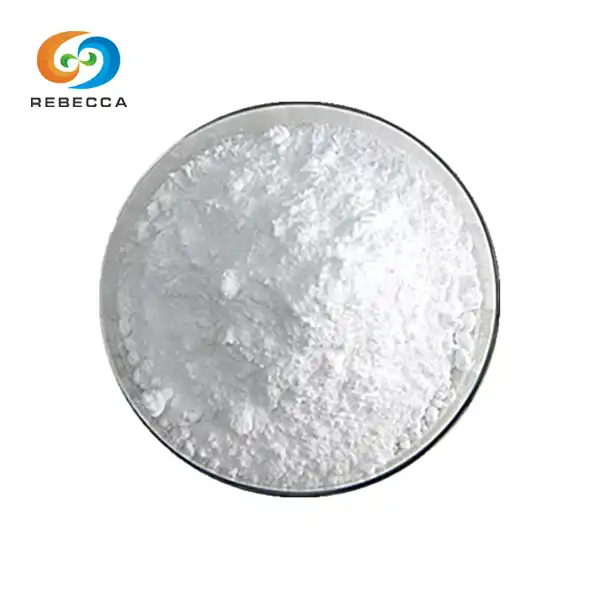
Appearance: White crystalline fine powder, slight characteristic odor
Available Certifications: ISO22000, cGMP, HACCP, HALAL, KOSHER, COA & SDS per batch
What "Pure" Actually Means?
The phrase “pure” is used loosely in the B2B ingredients trade. The working definition is more restrictive: a creatine monohydrate powder, HPLC-assayed for >99% purity with no undeclared excipients, negligible degradation products, and heavy metals below detection criteria.
In the industrial synthesis, sarcosine (N-methylglycine) is reacted with cyanamide in aqueous medium and crystallized as the monohydrate. Final purity is a function of reaction stoichiometry, crystallization temperature and washing procedures - thus explaining why two providers with identical spec sheets might deliver materially different product.
There are a few other versions vying for shelf space including creatine hydrochloride, creatine ethyl ester, buffered creatine (Kre-Alkalyn). Both have advantages in pharmacokinetics. The evidence is not great for those claims. Creatine ethyl ester is primarily converted to creatinine in vivo (Kreider et al., 2022) and the higher solubility of HCl has not translated into substantially enhanced muscle absorption in head-to-head studies. Pure creatine monohydrate powder is the most studied, cheapest type and has decades of clinical data to back it up.

How Purity Is Defined and Measured?
Testing Methods (HPLC, Titration)
HPLC is the workhorse method for quantification of creatine concentration. Purity on a dry basis is 99.0% or above, as checked to USP or EP monographs. Some vendors utilize non-aqueous titration as a cross-check, but HPLC is the ultimate method as it can also quantify degradation products that titration cannot differentiate. You should query a COA that only reports titration purity (and no HPLC data). The two most prevalent degradation products, Dicyandiamide (DCD) and creatinine cannot be detected by titration.
Impurity Control (DCD, Creatinine, Heavy Metals)
Three impurity categories dominate the spec sheet:
· Dicyandiamide (DCD) — a synthetic byproduct; specification limit typically <1 ppm. Higher levels signal incomplete reaction control during synthesis.
· Creatinine — the cyclization product of creatine degradation; limits usually set at <50 ppm per USP. Elevated creatinine indicates heat exposure or poor storage conditions.
· Heavy metals — Pb, As, Hg, Cd each below 1 ppm, meeting USP <232>/<233> and ICH Q3D elemental impurities guidelines.
Humidity is a problem in itself. Pure creatine monohydrate is a genuine hydrate, as the water molecule is part of the structure, not leftover moisture. Specifications vary between 10% and 12.5%, to account for the stoichiometric water of crystallization. Readings below 9.5% indicate over-drying (degradation of the substance toward anhydrous creatine) whereas readings above 13% indicate hygroscopic absorption during storage or insufficient packing.
To be honest, there are two physical features that make formulating with bulk pure creatine monohydrate powder a bit of a pain in the neck. Its solubility at room temperature is around 14 g/L, which is a serious constraint for concentrated liquid or ready-to-drink applications, as it can crystallize out of solution over shelf life. The substance is also considerably hygroscoplic. The storage from unsealed conditions and humidity raises moisture above specification within days, increasing creatinine production. Double-wall polyethylene liners with dessicant and outer fiber drums are not a packaging option, they are a practical requirement for preserving standard through transit and warehousing.

Bioavailability, Efficacy, and Safety: What the Science Says
Bioavailability vs. Other Forms
Oral bioavailability is essentially total absorption. Published reviews have it at roughly 99% when determined by plasma kinetics (Kreider, et al., 2022). In direct comparisons, no other type has shown statistically significant greater preservation of muscle on a per gram of creatine basis. Micronized creatine monohydrate (milled to a smaller particle size, usually 200 mesh or smaller) does increase dispersion in water and minimize grittiness in powder blends, but does not affect the bioavailability of the substance itself. The whole point of micronization is not pharmacokinetics, but handling and mixability.
There is extensive literature on effectiveness. The benefits of short duration, high intensity performance from a loading procedure (20 g/day for 5–7 days) are well recognized, while maintenance dose at 3–5 g/day maintains high muscle creatine reserves. Cognitive effects have been the focus of current study attention, with a meta-analysis of 16 trials in 2024 finding a minor but statistically significant benefit in memory tasks (SMD = 0.31, Xu et al., 2024). Creatine supplementation has been shown to be feasible in increasing brain creatine levels in a pilot study in older persons (Smith et al., 2025). A review of potential neuroprotective uses emphasized the need for larger confirmatory trials (Candow & Forbes, 2023).
Safety Profile: What Clinical Evidence Shows
Pure creatine monohydrate has the most solid proof record for safety . The ISSN position stand—a comprehensive assessment of over 200 studies—concluded that long-term supplementation at 3–5 g/day is safe in healthy populations (Kreider et al., 2017). The most common issue was kidney function, which was addressed in a 2025 systematic review and meta-analysis that demonstrated no significant changes in eGFR or serum creatinine in healthy adults at conventional doses (Kabiri Naeini et al., 2025).
Two caveats matter at the product development level: About 20-30% of people are "low responders" who have very little rise in muscle creatine content - presumably due to very high baseline reserves or variations in creatine transporter activity. This is a physiological limitation and not a quality problem, but it does impair the consumer sense of effectiveness. Pure creatine monohydrate powder is essentially tasteless, however one may detect a slight bitterness or gritty taste in ready-to-drink versions where masking chemicals or flavor systems may be required. In simple English, these are formulation problems R&D teams face every day, not reasons to stay away from the substance.

What Buyers Should Actually Look For?
Reading a COA
A Certificate of Analysis is only as useful as the parameters it reports. At minimum, verify these line items on every COA for pure creatine monohydrate:
|
Parameter |
Specification |
Why It Matters |
|
Assay (HPLC) |
≥99.0% |
Confirms creatine content |
|
DCD |
<1 ppm |
Reaction control |
|
Creatinine |
<50 ppm |
Degradation indicator |
|
Heavy metals (Pb/As/Hg/Cd) |
<1 ppm each |
Safety compliance |
|
Moisture |
10–12.5% |
Hydrate integrity |
|
Particle size |
200 mesh or finer (if micronized) |
Mixability |
Missing any of these? Ask. A creatine monohydrate supplier that cannot provide HPLC data or heavy metals testing on a per-batch basis is not a vendor you want for production-scale orders.
Supplier Qualification
Choosing a provider without an audit is a gamble. Vendor audits need to address four areas: manufacturing certification (GMP, cGMP or equivalent), registration of the FDA facility for US bound shipments, documented quality management system (ISO 22000 or equivalent) and full traceability from raw material to finished batch. On-site audits or at least a reputable third party audit report are available on request. Let me put this bluntly: credentials are required but not sufficient. Batch records and stability data are how you know whether the creatine monohydrate company for pure creatine monohydrate powder is running a regulated process or a batch-to-batch lottery.

FAQ
What storage conditions are required?
Store in a cool, dry place below 25°C, away from direct sunlight. Sealed packaging with desiccant is essential. Once opened, use within 24 months. Refrigeration is not required and does not meaningfully extend shelf life.
What is a typical lead time for bulk creatine monohydrate orders?
Production lead time ranges from 7 to 15 business days depending on order volume and grade. Micronized and custom particle size specifications may add 3–5 days. Shipping documentation — COA, packing list, certificate of origin — is prepared concurrently.
Can COA parameters be customized for our QA requirements?
Yes. Standard COAs include assay, impurities, heavy metals, and microbiological data. Additional parameters — residual solvents, expanded heavy metals panels, or third-party laboratory testing — can be arranged with your creatine monohydrate supplier. Specify your requirements at the quotation stage.
What custom specifications are available for micronized grades?
Standard grades include 80 mesh and 200 mesh. Custom particle size distributions, tailored bulk densities, and specific packaging configurations are also available. Minimum order quantities vary by customization level.
Batch Consistency
Request COAs for three sequential lots. Compare test results, DCD, creatinine and moisture of the set. If the spread is > 0.5% on test or the DCD differs by an order of magnitude, the process is not statistically controlled. Request the supplier’s internal spec limits. If those are wider than what the COA states, then the published standard is aspirational, not real.
Shaanxi Rebecca Bio-Technology Co., Ltd. We manufacture pure creatine monohydrate powder to an internal spec that is tighter than the industry default: HPLC purity ≥99.5%, DCD below 0.5 ppm and every batch ships with a comprehensive COA containing heavy metals, microbiological panel and particle size distribution. Our manufacturing plant is FDA registered and GMP approved, and we manufacture micronized creatine monohydrate in 80 mesh and 200 mesh grades, also available in custom particle distributions and package formats, upon request. Each batch we save samples for 2 years and each shipment comes with complete traceability paperwork. If you are looking for a creatine monohydrate producer that treats every COA as a quality contract and not a marketing document, contact us: information@sxrebecca.com.
References
1. Kreider, R.B., Kalman, D.S., Antonio, J., et al. (2017). International Society of Sports Nutrition position stand: safety and efficacy of creatine supplementation in exercise, sport, and medicine. Journal of the International Society of Sports Nutrition, 14, 18.
2. Kreider, R.B., Jager, R., & Purpura, M. (2022). Bioavailability, Efficacy, Safety, and Regulatory Status of Creatine and Related Compounds: A Critical Review. Nutrients, 14(5), 1035.
3. Candow, D.G., & Forbes, S.C. (2023). "Heads Up" for Creatine Supplementation and its Potential Applications for Brain Health and Function. Sports Medicine, 53(Suppl 1), S37–S45.
4. Xu, C., Bi, S., Zhang, W., & Luo, L. (2024). The effects of creatine supplementation on cognitive function in adults: a systematic review and meta-analysis. Frontiers in Nutrition, 11, 1424972.
5. Kabiri Naeini, E., Eskandari, M., Mortazavi, M., Gholaminejad, A., & Karevan, N. (2025). Effect of creatine supplementation on kidney function: a systematic review and meta-analysis. BMC Nephrology, 26, 622.
6. Smith, A.N., Choi, I-Y., Lee, P., et al. (2025). Creatine monohydrate pilot in Alzheimer’s: Feasibility, brain creatine, and cognition. Alzheimer’s & Dementia: Translational Research & Clinical Interventions, 11, e70101.