Is it good to take L carnitine everyday?
Daily L-carnitine supplementation has become a popular choice for metabolic maintenance, sports fitness and daily sub-health conditioning. Many consumers and brand formulators question whether long-term daily intake is safe, effective and necessary. Based on decades of clinical trials and global regulatory verification, daily standardized l carnitine protein powder intake is safe and beneficial for specific groups. It delivers stable metabolic improvement with almost no adverse reactions. For ordinary healthy people with balanced diet, daily supplementation is not mandatory. This article systematically analyzes the rationality, core benefits, safe usage specifications and industrial application value of daily L-carnitine intake to provide evidence-based guidance for end users and B2B ingredient procurement.
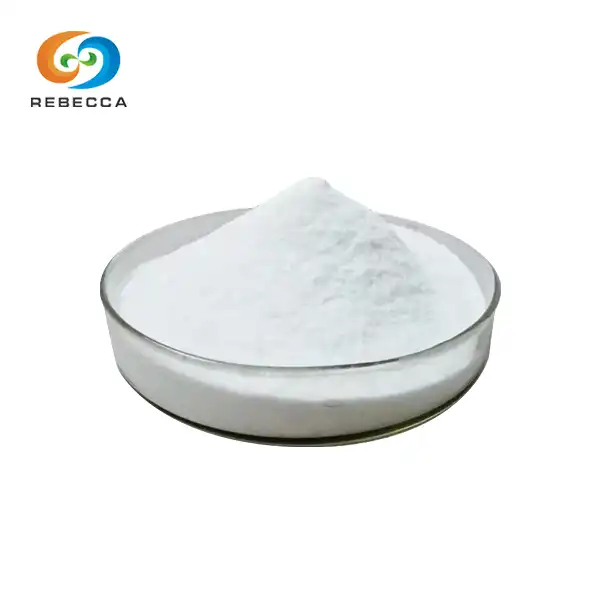
Product Name:L-carnitine
CAS No.:541-15-1
Specifications :L(-)-Carnitine,Min 99%
Test :HPLC
Appearance :White crystalline Powder
Applying:The safest nutritional supplement for weight loss without side effects.
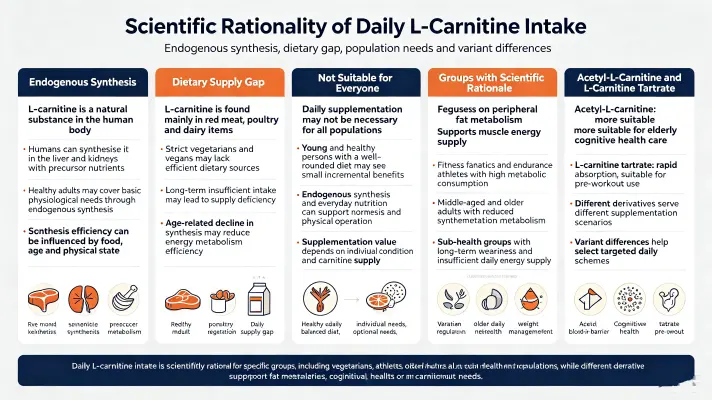
Scientific Rationality of Daily L-Carnitine Intake
To judge whether daily supplementation is beneficial, it is necessary to start with human endogenous synthesis characteristics and metabolic operation rules. The matching degree between individual physical conditions and carnitine supply determines the value of long-term daily intake.
Endogenous Synthesis and Daily Supply Gap
L-carnitine is a natural substance in human bodies. However, humans may also synthesise it independently in the liver and kidneys, with the help of certain precursor nutrients. Normal food conditions are sufficient to cover the basic physiological needs of healthy adults with daily endogenous synthesis. However, the efficiency of synthesis can be easily influenced by food, age and physical state.
L-carnitine from diet is found predominantly in animal products such as red meat, poultry and dairy items. Strict vegetarians and vegans have no efficient sources of nutritional supplements. But long-term carnitine intake is not enough, thus the body is in a state of supply deficiency . Further, the synthesis ability of the human body decreases slowly with age. A common condition of the elderly is insufficient endogenous carnitine, which reduces the efficiency of energy metabolism.
Population-Specific Necessity of Daily Supplementation
Daily L-carnitine supplementation may not be suitable for all populations. For young and healthy persons, with a well-rounded diet and stable metabolism, the incremental benefits of daily additional intake are small. Their physical operation can be totally supported by their endogenous synthesis and everyday nutrition.
Daily supplementation for four kinds of groups has great scientific rationale and practical value. The first group are vegetarians and vegans with a specific dietary structure. The second is the fitness fanatics and endurance athletes with high metabolic consumption. The third is middle-aged and older adults with reduced synthesis and slow metabolism. The fourth one is sub-health groups with weariness in the long-term and daily insufficient exercise energy supplies Daily supplementation over a long period can effectively make up for their metabolic abnormalities and improve their physical status.
Differences in Daily Effects of Common L-Carnitine Variants
Different L-carnitine derivatives have different applicable scenarios for daily supplementation. Ordinary L-carnitine powder focuses on peripheral fat metabolism and muscle energy supply. It is the most suitable variant for daily metabolic regulation and weight management .
Acetyl-L-carnitine is more inclined to cross the blood-brain barrier. It is suitable for daily cognitive health care of the elderly rather than conventional fat metabolism regulation . L-carnitine tartrate has rapid absorption characteristics. It is more suitable for daily sports pre-workout supplementation to improve exercise state. Clarifying variant differences helps users and formulators select targeted daily supplementation schemes.
The targeted daily supplementation for specific groups can bring measurable physiological improvements. These verified functional benefits are the core reason for the wide popularity of daily L-carnitine supplements in the health market.
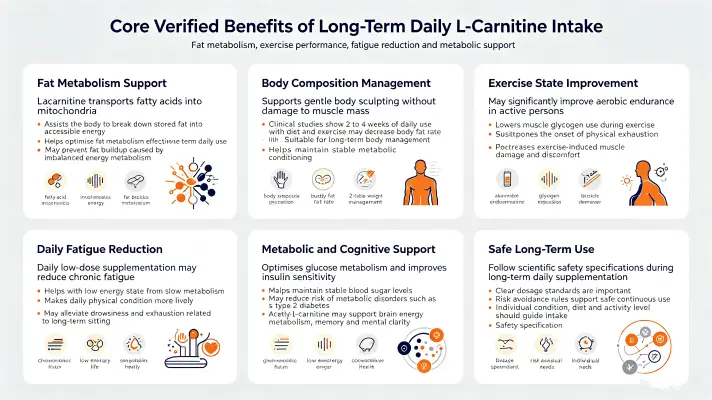
Core Verified Benefits of Long-Term Daily L-Carnitine Intake
Stable Regulation of Fat Metabolism and Body Composition
Carnitine can constantly optimise the effectiveness of human fat metabolism with long-term daily ingestion. L-carnitine transports fatty acids into mitochondria. It assists the body to breakdown stored fat into accessible energy every day in a stable way . It prevents the fat buildup due to an imbalanced energy metabolism.
Daily L-carnitine administration provides soft body sculpting without damage to muscle mass, unlike chemicals that promote quick weight loss. Clinical studies demonstrate that continuing daily use for 2 to 4 weeks in combination with a well-rounded diet and proper exercise may dramatically decrease body fat rate . It is particularly good for long term body management and everyday metabolic conditioning.
Improvement of Exercise State and Daily Physical Fatigue
For persons who exercise regularly, daily consumption of L-carnitine may significantly improve aerobic endurance. It lowers the use of muscle glycogen during exercise and postpones the onset of physical exhaustion. It also decreases exercise-induced muscle damage and discomfort and enhances everyday physical recovery.
Daily low-dose supplementation is able to reduce the chronic fatigue for regular sedentary sub-health groups. It helps with the low energy state from a slow metabolism. Makes the everyday physical condition more lively and cures the sub-health problem of drowsiness and exhaustion induced by long-term sitting.
Auxiliary Regulation of Metabolic and Cognitive Health
Long-term daily L-carnitine supplementation can optimize glucose metabolism and improve insulin sensitivity. It helps maintain stable blood sugar levels and reduce the risk of metabolic disorders such as type 2 diabetes . It provides a safe daily conditioning method for middle-aged and elderly people with declining metabolic function.
For elderly groups, long-term daily intake of acetyl-L-carnitine can improve brain energy metabolism. It helps enhance memory and mental clarity, and alleviate age-related cognitive decline . This multi-dimensional health benefit expands the application value of daily L-carnitine supplementation.
While obtaining health benefits, daily long-term supplementation must follow scientific safety specifications. Clear dosage standards and risk avoidance rules are the premise of safe and long-term use.
Daily Safety Dosage, Side Effects and Usage Specifications
Evidence-Based Daily Safe Dosage Range
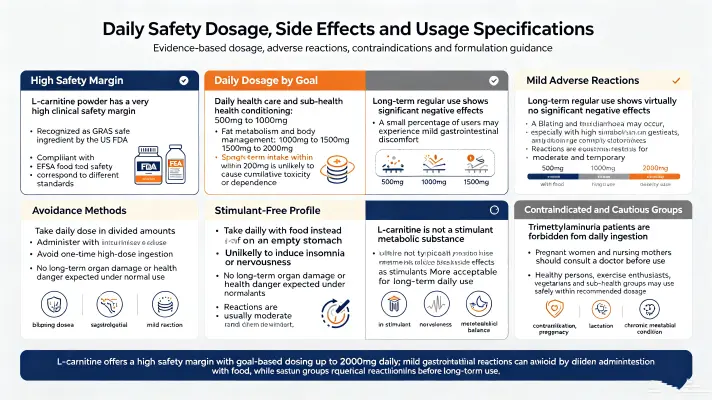
L-carnitine powder has a very high clinical safety margin. It is recognized as GRAS safe ingredient by the US FDA and compliant with EFSA food safety standards . Different daily dosage ranges correspond to different health goals, with clear clinical verification basis.
For daily health care and sub-health conditioning, the recommended daily dosage is 500mg to 1000mg. For daily fat metabolism and body management, the daily dosage can be stably maintained at 1000mg to 1500mg. For daily sports fitness conditioning, the daily safe dosage is 1500mg to 2000mg. Long-term daily intake within 2000mg will not cause cumulative toxicity or physical dependence.
Mild Adverse Reactions and Avoidance Methods
There are virtually no significant negative effects from long term regular L-carnitine use. A small percentage of users may experience moderate gastrointestinal discomfort such as bloating and diarrhoea. This is typically the case with a one-time high-dose ingestion on an empty stomach.
Taking the daily dose in divided doses with food will entirely prevent all moderate unwanted reactions. There is no long-term organ damage or health danger from ongoing daily use. L-carnitine is not like stimulant metabolic substances, it will not induce insomnia, nervousness or metabolic issues, more acceptable for long-term daily use.
Contraindicated Groups for Daily Supplementation
Carnitine is safe but is not recommended for daily supplementation for all populations. Patients with trimethylaminuria are forbidden from daily ingestion, which may worsen physical symptoms . Pregnant women, nursing mothers and patients with chronic metabolic problems should consult a doctor before taking long-term daily supplementation.
Under normal circumstances, healthy persons, exercise enthusiasts, vegetarians and sub-health groups can take it for a long time safely, as long as the standard dosage is followed. Strict group screening can effectively remove any safety risk of daily supplement.
B2B daily health supplement development with high quality powder raw material has unique formulation advantages based on the safe and effective daily application characteristics of L-carnitine, offering sustained commercial value for brand maker.
Conclusion
Daily L-carnitine intake is safe, scientific and beneficial for targeted groups. It is not necessary for healthy people with balanced diet and normal metabolism. But it provides significant metabolic improvement for vegetarians, fitness enthusiasts, sub-health groups and the elderly. Long-term standardized daily supplementation can optimize fat metabolism, improve exercise recovery, relieve chronic fatigue and regulate metabolic health. With high safety, no side effects and strong formulation compatibility, high-purity L-carnitine powder is an excellent raw material for developing daily health supplementary products. Strictly abiding by daily dosage specifications and selecting compliant high-quality raw materials can maximize the health value of daily L-carnitine supplementation and create competitive terminal products.
FAQ
Is Daily Supplementation Necessary for Everyone?
Healthy individuals consuming adequate protein typically synthesize sufficient endogenous levels. Supplementation benefits specific populations including strict vegetarians whose diets lack precursor amino acids, athletes with elevated metabolic demands, and aging individuals experiencing declining biosynthetic capacity. Procurement decisions should target product positioning toward these evidence-based demographics rather than mass-market claims lacking clinical substantiation.
Can It Be Combined with Other Ingredients?
Clinical evidence supports safe combination with most vitamins, minerals, and amino acids. Synergistic pairings with coenzyme Q10 enhance mitochondrial function, while combination with alpha-lipoic acid supports antioxidant pathways. Formulation stability testing remains essential, as certain ingredients may affect pH, moisture sensitivity, or degradation kinetics during shelf life. Consult regulatory guidelines regarding maximum daily intake levels when creating multi-ingredient formulations.
How Do I Select a Reliable Supplier?
Prioritize suppliers offering transparent traceability from raw material sourcing through final packaging. Request multiple batch CoAs demonstrating consistent purity levels and absence of contaminants. GMP certification, ideally audited by recognized third-party bodies, indicates robust quality systems. Responsive technical support, including formulation guidance and stability data, differentiates partners committed to long-term collaboration from transactional vendors.
Partner with Rebecca for Premium L-Carnitine Supply
Rebecca specializes in high-purity active ingredients, including L-carnitine powder that meet the exacting standards of pharmaceutical R&D and health supplement formulation. Our white crystalline powder achieves minimum 99% purity (CAS 541-15-1), verified through HPLC testing and backed by comprehensive GMP documentation. With annual production capacity exceeding 500 metric tons across three dedicated lines, we provide batch consistency and scalable supply for global procurement needs. Whether you require flexible MOQs for product development or bulk pricing for established formulations, our team delivers customized solutions aligned with FDA and EFSA compliance requirements. Contact our specialists at information@sxrebecca.com to request technical specifications, stability data, or trial samples that support your next product innovation.
References
1. Rebouche, C.J. (2004). Kinetics, pharmacokinetics, and regulation of L-carnitine and acetyl-L-carnitine metabolism. Annals of the New York Academy of Sciences, 1033, 30-41.
2. Fielding, R., Riede, L., Lugo, J.P., & Bellamine, A. (2018). L-carnitine supplementation in recovery after exercise.Nutrients, 10(3), 349.
3. Malaguarnera, M., Cammalleri, L., Gargante, M.P., Vacante, M., Colonna, V., & Motta, M. (2007). L-carnitine treatment reduces severity of physical and mental fatigue and increases cognitive functions in centenarians. American Journal of Clinical Nutrition, 86(6), 1738-1744.
4. Karlic, H., & Lohninger, A. (2004). Supplementation of L-carnitine in athletes: does it make sense? Nutrition, 20(7-8), 709-715.
5. Mingrone, G. (2004). Carnitine in type 2 diabetes. Annals of the New York Academy of Sciences, 1033, 99-107.
6. Wall, B.T., Stephens, F.B., Constantin-Teodosiu, D., Marimuthu, K., Macdonald, I.A., & Greenhaff, P.L. (2011). Chronic oral ingestion of L-carnitine and carbohydrate increases muscle carnitine content and alters muscle fuel metabolism during exercise in humans. Journal of Physiology, 589(4), 963-973.